


Charging Station

Proximity Is the New Luxury

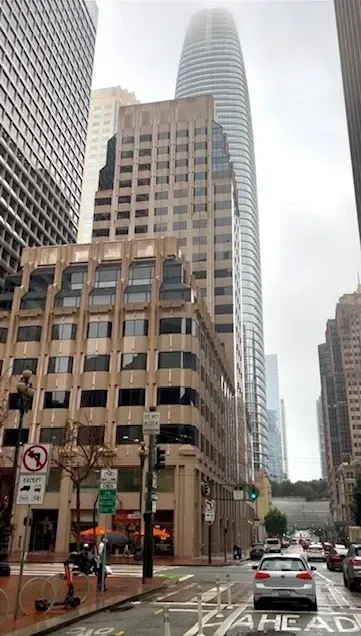
Some properties come with million-dollar views — mountain ridges, coastal overlooks, iconic landmarks. Others offer unexpected beauty tucked into forgotten corners. At Aveunture’s, we scout and study each site for what it could be, not just what it is. Whether it’s a quiet overlook near the Golden Gate or a roadside pause with a glimpse of Hoover Tower, we believe the right placement transforms space into experience. For landowners, it’s not just about location — it’s about unlocking the value of what’s nearby.
At Aveunture, we believe every charging station should offer more than just power — it should offer presence. That’s why we invite our partners, investors, landowners, and vendors to join us on curated excursions as we explore future site locations. These are full-sensory field days — complete with fresh coffee brewed on-site, thoughtful refreshments, and the occasional cigar or outdoor cookout. Together, we don’t just assess logistics — we imagine possibilities. We look for natural shade, scenic views, and spaces that welcome return visits. Because comfort, beauty, and atmosphere lead to more charging sessions, stronger brand loyalty, and better business. Let’s move beyond the back walls of big-box stores — and build something worth coming back to.

The Return of the Third Place.

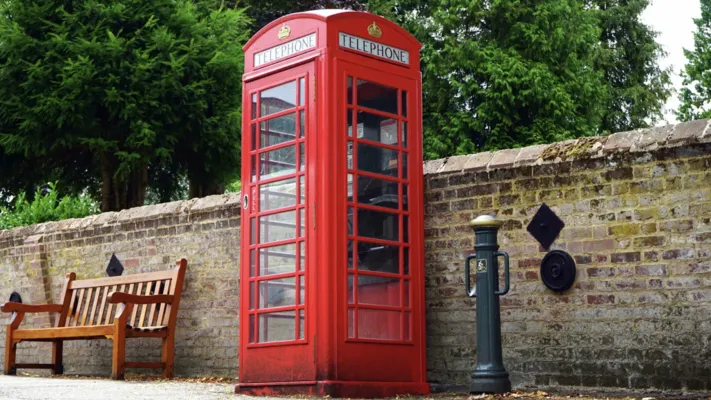
In the golden age of American travel, the telephone booth was a lifeline, the mom-and-pop gas station was a haven, and the open road was full of promise. These were the third places—not quite home, not the final destination, but deeply human spaces where connection, rest, and reliability lived.
Today, that kind of experience is nearly extinct. But at Aveunture, we’re bringing it back—not just building charging stations, but creating modern-day third places. Stops that are meaningful, memorable, and built for people, not just cars. Just as independent gas stations once rose up across Route 66 before corporate giants followed, we believe small business will lead the way in electrifying America. Tesla may have built the first great system—but it takes community rooted, locally managed stations to truly finish the job. We’re proud to stand in that tradition. Our stations are more than plugs— they’re places. And they’re the future of how America moves.

One Space, One View, One Opportunity

Sometimes, all it takes is a single charging station — placed in the right spot — to create a destination. Imagine pulling up to charge with a direct view of Coit Tower, the Transamerica Pyramid, or the Palace of Fine Arts. These aren’t just backdrops — they’re landmarks that turn a routine stop into a memorable moment.
In a city like San Francisco, where every parking space tells a story, placing one or two chargers in the right proximity to iconic views can create a high-demand, high-frequency location. People will come back again and again — not just to charge, but to experience where they’re charging.
That’s the future we see: charging as part of the city’s rhythm, not hidden in the shadows.

Proximity Creates Opportunity

At Aveunture’s, we don’t just install chargers — we activate places. Every piece of land has its own story, its own vantage point, its own relationship to the world around it. That’s why we focus on proximity — to other chargers, to key routes, and to overlooked communities.
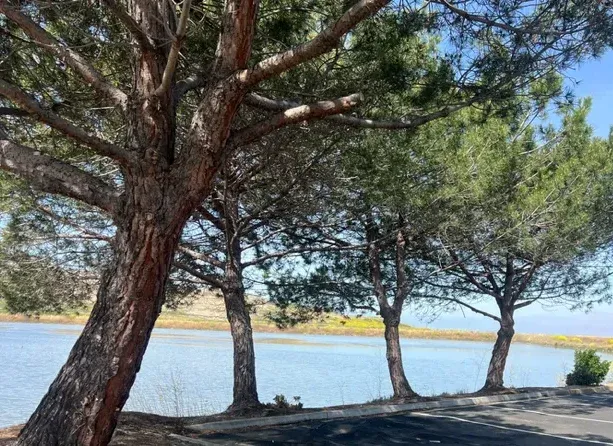
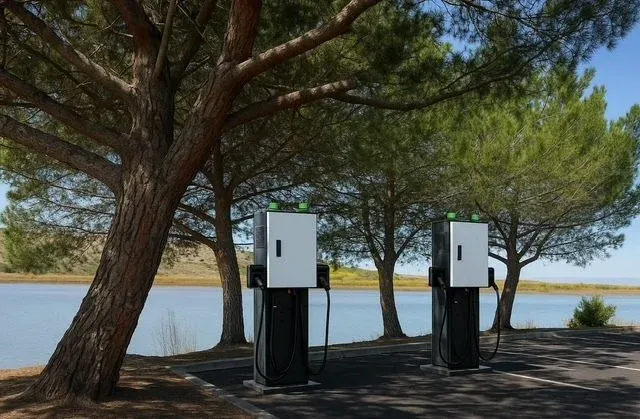
When we scout a location, we physically park our vehicles to study sight lines, sun angles, and user experience — sometimes under a grand oak, sometimes beside a ridge trail. On one such visit, a flock of wild turkeys walked straight through our setup — a real moment in a real place. We’re seeking small landowners who may have room for just one or two chargers, yet sit in the perfect proximity to a growing network.

It starts with a pause — a moment to see what’s possible.

1. We park. Then we ponder. That’s how charging site decisions begin.

2. Parked with purpose. Every great location starts with a great view.

Your Project, Expertly Managed

When you partner with us, you’re assigned a dedicated project manager who will guide you from first sketch to final installation. We know that technical drawings, electrical plans, and permitting requirements can feel overwhelming.

Clear, user-friendly explanations

We translate complex engineering data into plain language and provide simplified plan sets so every stakeholder can easily visualize the design.

Full code and permitting support

All local, county, and state codes—as well as utility and inspection requirements—are handled on your behalf.

Seamless communication

Your project manager coordinates directly with contractors, inspectors, and government agencies so you can focus on your business.

This approach mirrors the best practices used by leaders in the EV-charging industry—Tesla and other top networks routinely highlight their end-to-end project support. Our goal is the same: to make the entire process simple, transparent, and stress-free for you.

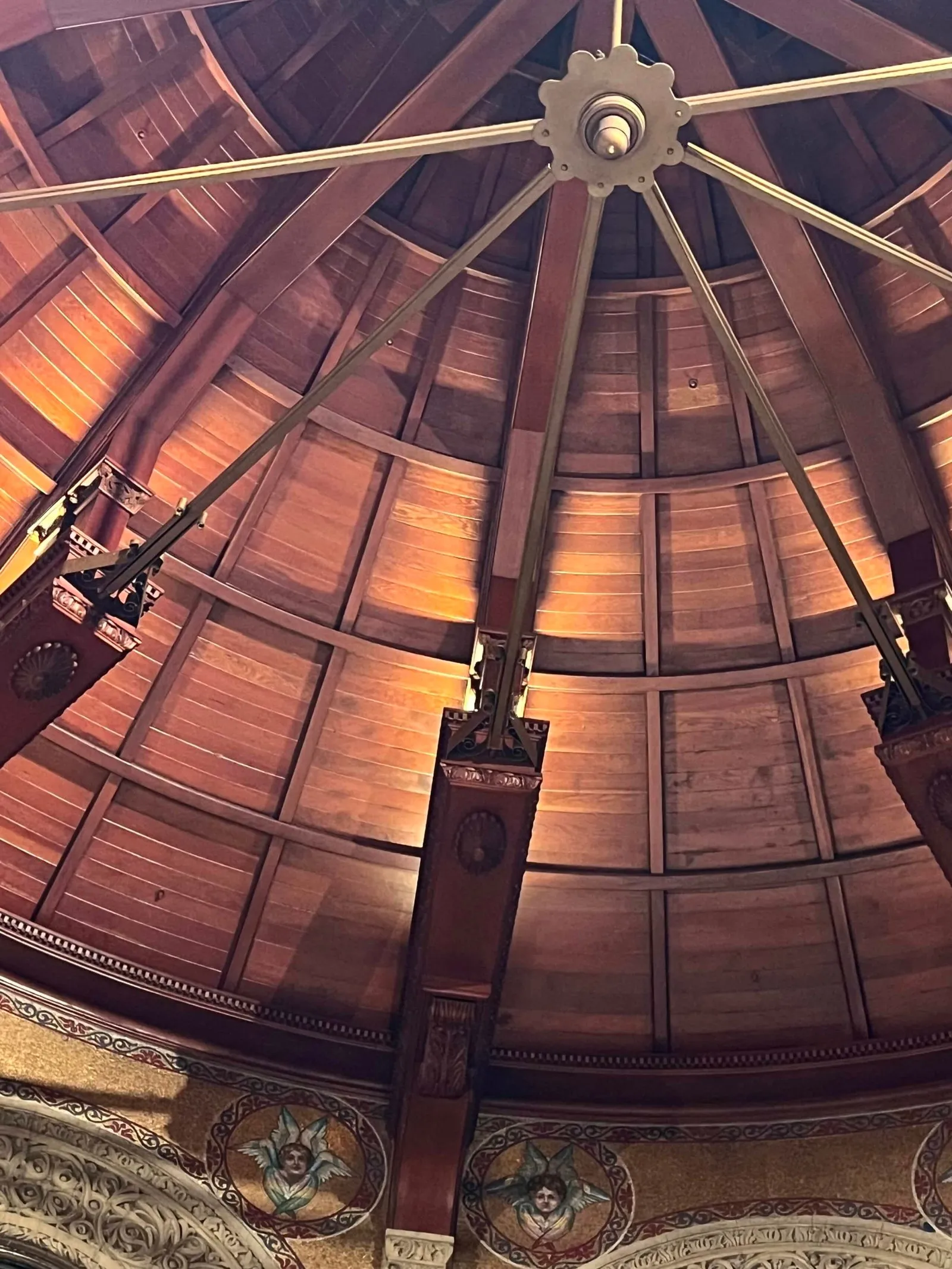
Stanford university church dome interior.

Architecture, by Design — Not by Accident

We are deliberate about architecture because the built environment shapes how people move, pause, and experience a place. Proportion, light, material, and geometry matter. They signal intention. They create calm. They invite trust. Where amenities are required, they are designed as subtle transition structures — restrooms, small retail, or service stops — carefully integrated to feel native to their setting, whether adjacent to a university, a winery, or open land.

The Urban Monolith

Strong. Silent. Sustainable.
The Urban Monolith is a compact, minimalist structure built to endure. With bold massing, geometric form, and low-maintenance surfaces, this design reflects the architectural tradition of civic strength and infrastructure permanence. Inspired by early Brutalism but refined for today’s urban and industrial zones, it is ideal for districts in need of resilience, safety, and longevity. Its small footprint, scalable layout, and robust design make it an excellent choice for: Freeway off-ramps Metro redevelopment zones Underserved city sectors

Key Features:

The Civic Glass

A clear vision for future mobility.
This ultra-modern format prioritizes visibility, safety, and simplicity. The Civic Glass concept uses architectural transparency to project trust — a highly valuable signal in public infrastructure. Inspired by the glass-forward design seen in high-tech campuses and civic pavilions, this structure makes a bold yet inviting statement. Its efficient design allows for fast deployment with full compliance: Security, ADA access, signage, energy systems, and EV equipment all integrate cleanly. The Civic Glass structure performs well in tech corridor environments, urban centers, and transit-oriented development zones. Designed for modern cities, smart growth districts, and data-connected networks.

Key Features:

The Stanford Pavilion

An intelligent face for infrastructure.
This concept reflects the academic and institutional styles found in places like Stanford University and the Leland Stanford Museum — rooted in Neoclassical Revival and Beaux-Arts principles. Its formal symmetry and neutral palette make it an ideal fit for civic centers, campus gateways, or transportation nodes. The Stanford Pavilion offers a strong, professional face for infrastructure: refined but not ostentatious. Easily adapted to serve both pedestrians and drivers, this format includes clear sightlines, durable stone-texture finishes, and space for public notices or digital signage. Well suited for agencies pursuing public confidence, clear branding, and a built environment that conveys permanence.

Key Features:

The Prairie Modern

Rooted in the land, reaching toward tomorrow.

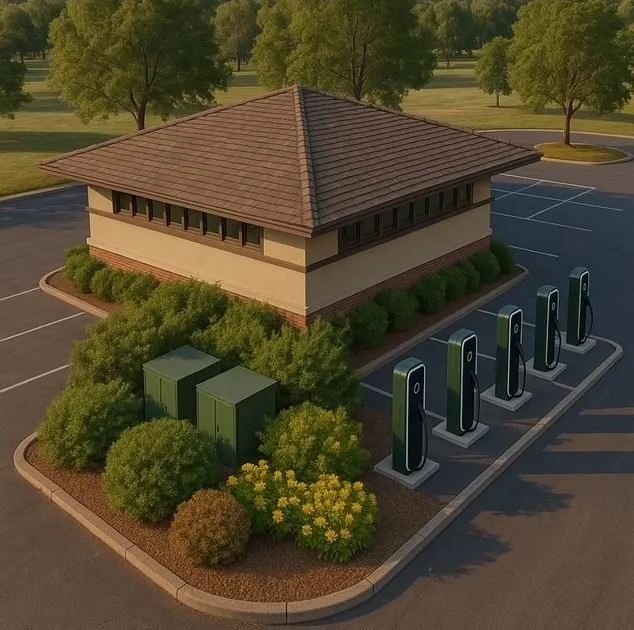
Inspired by the principles of American organic architecture, The Prairie Modern offers a low-profile, horizontally anchored design ideal for open landscapes, agricultural corridors, and transitional highway properties. Using natural materials like wood and stone, this format visually integrates with its surroundings while housing all necessary infrastructure for EV charging, lighting, and site management.
Blending Nature and Innovation Inspired by Frank Lloyd Wright’s Prairie School design, our Prairie Modern structures offer a low-profile, horizontally oriented aesthetic that harmonizes with the surrounding landscape. Designed with wide overhanging eaves, flat or hipped roofs, and a strong emphasis on natural materials, these charging centers feel like part of the terrain rather than imposed on it.

Key Features:

The Mission Revival 

History meets sustainability under sun-baked tile.

This concept draws from the enduring elegance of California’s historic missions, offering stucco exteriors, tile roofs, and arched walkways in a compact footprint. Designed with regional sensitivity in mind, The Mission Revival is ideal for coastal, Central Valley, and legacy towns where architectural continuity matters. Perfect for tourism corridors, city beautification efforts, and public-private partnerships, this station type provides an elegant solution for EV deployment that feels authentic to its environment and rooted in California’s built heritage.

Key Features:

Its timeless proportions and modular footprint allow for scalable installations—from a basic two-bay unit with restrooms to a full amenity-rich stop including shelter, wayfinding, and grid-based or solar-ready energy access. Ideal for legacy landowners, county highways, and federal land corridors seeking a minimal visual impact with maximum long-term value.

The Parklands Heritage

This concept evokes the rustic elegance and natural harmony found in America’s most iconic national park structures. Drawing architectural cues from the U.S. National Park Service’s early 20th-century design ethos — often referred to as “Parkitecture” — this style pays tribute to the Civilian Conservation Corps era of building. Rooted in sustainability and contextual awareness, this design integrates seamlessly into wooded, mountainous, or ecologically sensitive regions.

Architectural Reference

Optional Configurations

Recommended Use Cases

Rooted in America’s conservation legacy, the Parklands Heritage model is designed to be at home beneath towering pines or set against granite outcroppings. With its use of native materials and unobtrusive profile, this format is ideal for scenic or protected lands. It honors the architectural values that helped build the lodges, ranger stations, and waypoints of our National Parks system — while offering a fully modern EV experience.

The Heritage Outpost

This concept draws heavily from the classic mid-20th-century American roadside aesthetic — particularly the mom-and-pop gas stations, motor lodges, and rest stops that once defined the nation’s highways. From Route 66 to dusty desert towns in Arizona and California, these compact yet deeply human-centric buildings helped connect the country and offered a sense of familiarity to travelers.

Architectural Reference

Recommended Use Cases

Optional Configurations

Hiding Tech in Plain Sight with Nature

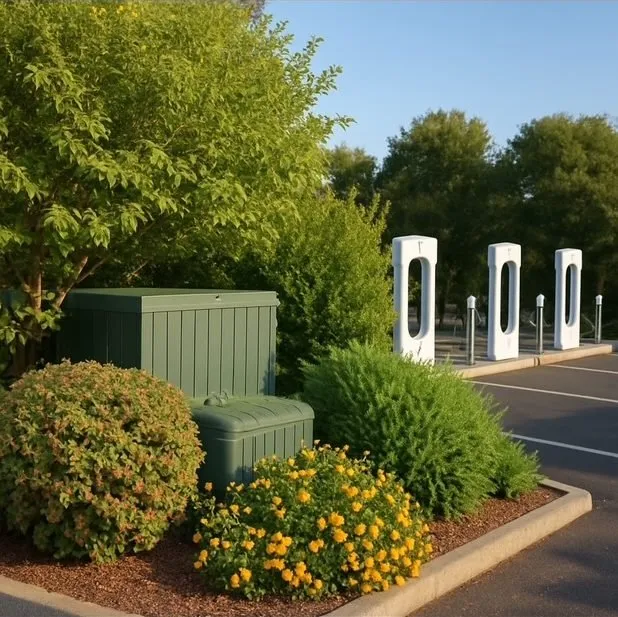
At Aveunture’s, our site planning strategy incorporates two distinct but complementary visual mitigation techniques: spatial dominance and vegetative concealment. In the first, we utilize vertical landscaping—such as redwoods or other tall native trees—to visually anchor the site and shift attention away from power distribution cabinets and charging equipment.
This method leverages height and canopy density to create a visual hierarchy, reducing the perceptual impact of lower-profile infrastructure. Alternatively, we implement layered plantings using dense shrubs and native foliage to fully obscure equipment at eye level, achieving near-total concealment. These techniques are selected based on site conditions, visibility zones, and regulatory requirements, ensuring aesthetic integration without compromising functionality or access.

SOLAR PANELS

Compact Design. Scalable Opportunity.

For independent investors and small business owners, this compact setup offers a practical entry into the EV charging sector. With integrated solar and battery storage, operators can reduce dependency on the utility grid—or even operate fully off-grid. This is especially valuable for rural corridors, roadside locations, or areas with limited infrastructure. Battery storage ensures round-the-clock availability, storing excess solar energy during the day for use during peak hours or nighttime charging. The result: lower energy costs, access to renewable energy incentives, and a resilient, high-efficiency investment model built for real-world growth.

We Break Bread Before We Break Ground.

Our journeys aren’t merely about scouting land; they’re about connecting with one another. Over a shared meal in the fresh air, we pause to reflect, reset, and plan what’s next. With our Defenders backed in, grills fired up, and coolers stocked, we come together as partners, visionaries, and friends. Every great idea needs space to breathe—and sometimes, that space is as simple as a picnic table in a redwood grove.

Proximity Is the New Luxury

Some properties come with million-dollar views — mountain ridges, coastal overlooks, iconic landmarks. Others offer unexpected beauty tucked into forgotten corners. At Aveunture’s, we scout and study each site for what it could be, not just what it is. Whether it’s a quiet overlook near the Golden Gate or a roadside pause with a glimpse of Hoover Tower, we believe the right placement transforms space into experience. For landowners, it’s not just about location — it’s about unlocking the value of what’s nearby.

"Partnering with Beam Global to provide procurement-ready, solar-powered EV charging solutions for federal, state, and local agencies."

Charger Income

What Can One Charger Do for You?

Charger
Moderate Use $25,920/year
Peak Potential $54,000/year
📅 🔌 📍

Moderate Use

$25,920/year

Peak Potential

$54,000/year

PATH TO Ownership

What Can One Charger Do for You?
Estimate: $25,920
Peak Potential: $54,000 / year

PATH TO PARTNERSHIP

Where land, capital, and expertise come together

LANDOWNER

Provides land and lease agreement

INVESTOR

Funds equipment & install

OPERATOR

Maintains, operates, shares revenue

LIVE CHARGING SITE
Revenue, operations & service generating
“One charger on your land could mean thousands in recurring income — and here’s how simple it is to see.”
Monthly ROI & Cost Breakdown – DC Fast Charger
Scenario Monthly Revenue Est. Monthly Operating Costs Monthly Net Profit
Conservative $1,290 $700 $590
Moderate $2,550 $900 $1,650
Optimistic $6,300 $1,200 $5,100

Revenue per Charger – DC Fast Charger (Comprehensive Model)

Scenario Avg. Daily Sessions Fee per Charging Session Ad Revenue/Day Retail/Concessions Total Daily Revenue
Conservative 2 $10 $5 $8 $43
Moderate 5 $12 $10 $15 $85
Optimistic 10 $15 $25 $35 $210

💡 Financing Through Muybridge Capital

Getting started on your charging project shouldn’t be complicated. That’s why we provide access to financing through MuyBridge Capital, making EV infrastructure simple, flexible, and within reach.
Financing is provided by third-party partners, including Blue Street Capital, and is subject to credit approval. MuyBridge Capital does not underwrite or extend credit.
We’d love to hear from you! At Avuenture Supercharger Networks, we’re here to assist with any questions or inquiries.

Other pages

Privacy Policy

Term of Services

Blogs

Pricing & Packs

FAQ's

© 2024 Created with Aveunture Supercharger Networks
Scroll to Top